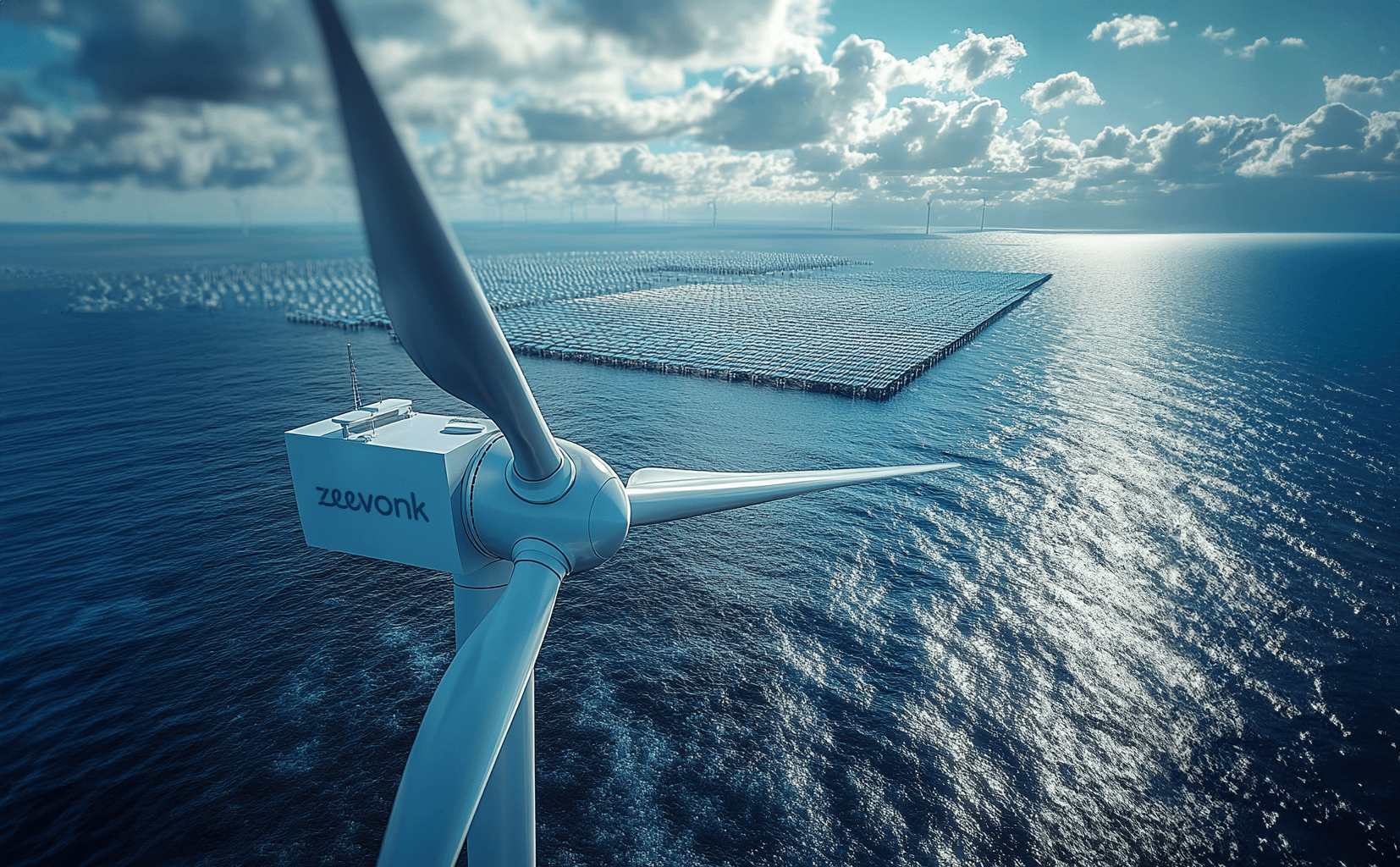
Around 62 kilometres off the Dutch coast, one of Europe’s largest offshore wind projects is taking shape. The Zeevonk offshore wind farm will have a total capacity of approximately 2 gigawatts, making a significant contribution to the Netherlands’ energy transition. The project is being developed by Vattenfall and Copenhagen Infrastructure Partners.
A maximum of 134 offshore wind turbines will be installed, each with a capacity of around 15 megawatts. These turbines represent the latest generation of offshore wind technology, designed to operate reliably under harsh marine conditions while maximising energy output.
At this scale, the wind farm is expected to generate enough electricity each year to cover around 7% of the Netherlands’ current electricity consumption, comparable to the annual demand of more than 2 million households.
The role of large-scale offshore wind
Large-scale offshore wind is becoming increasingly important as more economic sectors electrify in the coming decades. Industry, transport and data centres are using growing amounts of electricity, while fossil fuels are gradually being phased out of the energy system. Offshore wind enables the large-scale production of renewable electricity without placing additional pressure on limited land availability.
The North Sea offers favourable conditions for this development. Wind speeds are generally higher and more consistent than on land, allowing turbines to achieve higher energy yields. In addition, the relatively shallow waters, often only a few tens of metres deep, make it technically feasible to install stable foundations for offshore wind turbines.
As a result, offshore wind farms in the North Sea typically achieve capacity factors of around 45 to 55% compared to windmills on land (onshore). This means that, on average, turbines produce close to half of their maximum output over time, which is significantly higher than most onshore wind installations.
Floating solar and green hydrogen
The wind farm forms the foundation of the Zeevonk project. The electricity generated offshore enables new forms of system integration, including a floating solar park at sea and the production of green hydrogen.
By combining offshore wind with other renewable technologies, Zeevonk contributes to the development of an energy system that is better aligned with future demand for clean, reliable and flexible energy.
.png?width=1059&height=335&name=Logo-negative-background-horizontal%20block@4x%20(1).png "Logo-negative-background-horizontal block@4x (1)")
.png?width=158&height=50&name=Logo-negative-background-horizontal%20block@4x%20(1).png "Logo-negative-background-horizontal block@4x (1)")
.png)