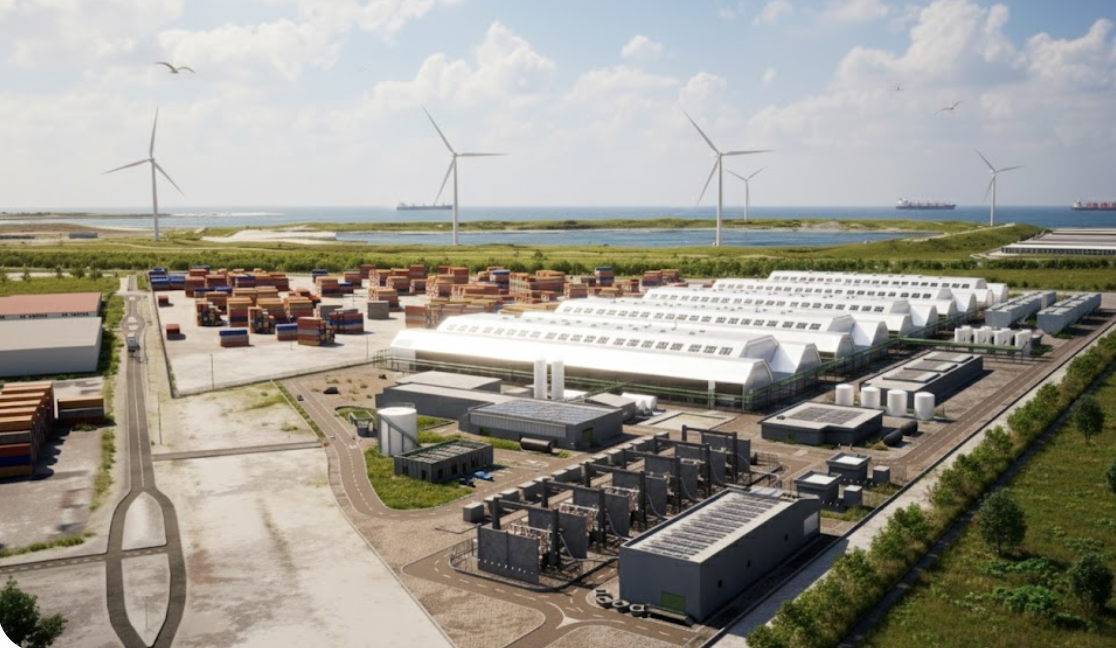
A key component of the Zeevonk project is the production of green hydrogen. Part of the electricity generated by the offshore wind farm will be used to produce hydrogen through electrolysis.
This hydrogen will be produced at the ‘Maasvlakte’ in the Port of Rotterdam, where a large-scale electrolyser will be installed. This facility uses electricity to split water into hydrogen and oxygen. When the electricity comes from renewable sources such as offshore wind, the result is green hydrogen.
Hydrogen in the industry
Hydrogen is already widely used in the industry today. In Europe, millions of tonnes of hydrogen are produced each year for applications such as oil refining, fertiliser production (ammonia), methanol and other chemical feedstocks. This hydrogen is currently produced primarily from natural gas, which results in significant CO₂ emissions. This form is commonly referred to as grey hydrogen.
Decarbonisation of hard-to-electrify sectors
Green hydrogen can gradually replace fossil-based hydrogen. This enables industries that are difficult to electrify to significantly reduce their CO₂ emissions. Examples include steel production, refineries, chemical plants and parts of heavy transport. This transition is essential if the European Union is to achieve climate neutrality by around 2050.
Hydrogen as part of the energy system
Hydrogen is expected to play an increasingly important role within the energy system itself. During periods of high wind generation at sea, part of the electricity can be converted into hydrogen. This hydrogen can then be stored and used later as a fuel, feedstock or energy carrier.
In this way, hydrogen provides a means of storing large volumes of renewable energy and deploying it flexibly across sectors and over time.
By directly linking offshore wind energy to hydrogen production, Zeevonk contributes to the development of a new energy system in which renewable electricity and green hydrogen complement each other.
.png?width=1059&height=335&name=Logo-negative-background-horizontal%20block@4x%20(1).png "Logo-negative-background-horizontal block@4x (1)")
.png?width=158&height=50&name=Logo-negative-background-horizontal%20block@4x%20(1).png "Logo-negative-background-horizontal block@4x (1)")