Floating solar
at sea
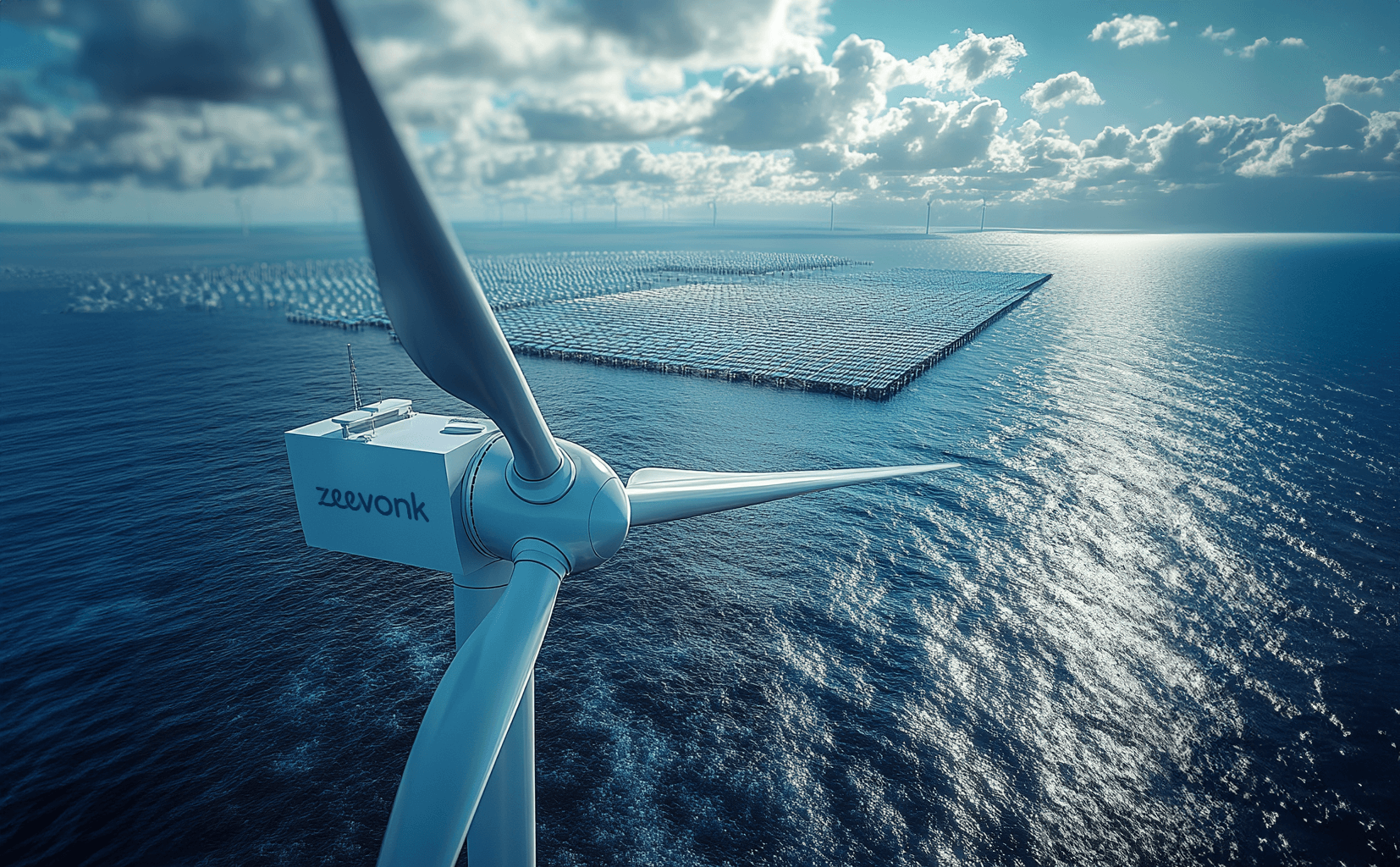
Zeevonk combines offshore wind with a large-scale floating solar park in the North Sea, introducing a hybrid approach to renewable energy generation. By integrating solar within the wind farm, the project improves space efficiency and creates a more balanced and predictable electricity supply.
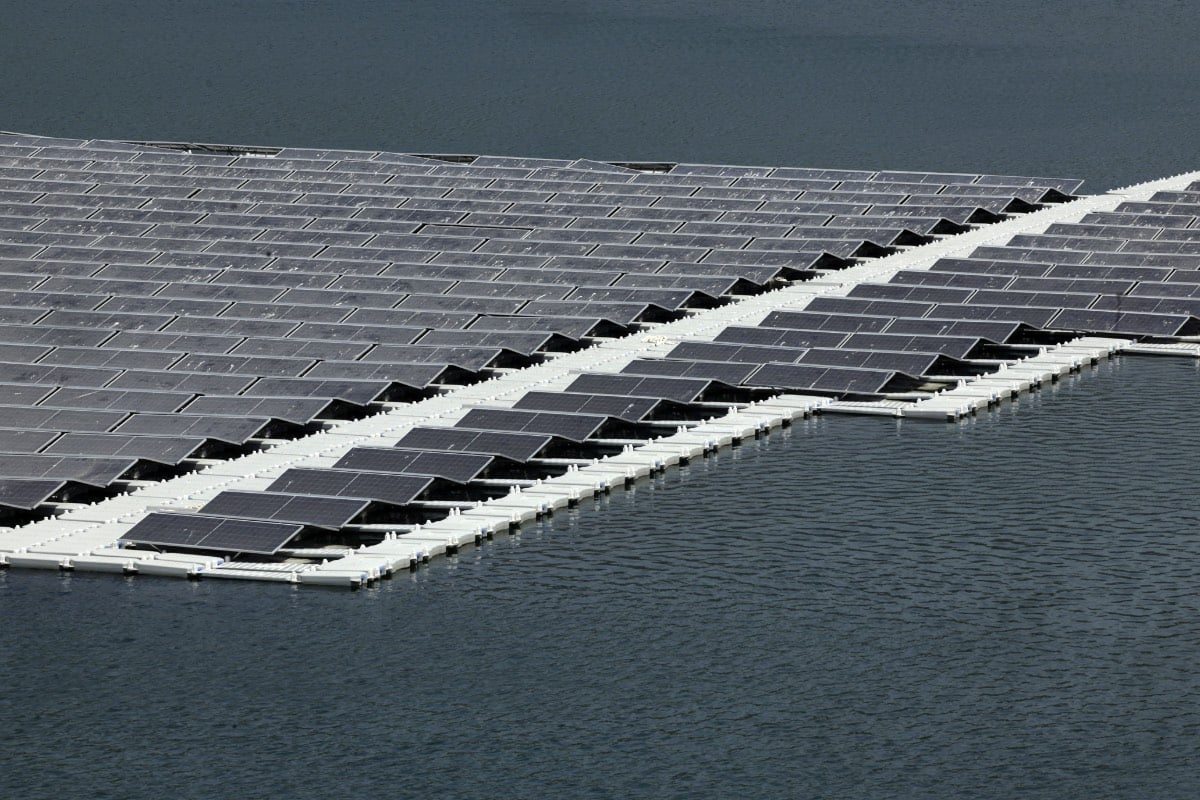
Alongside advanced offshore wind energy, Zeevonk introduces another innovation in the North Sea: a floating solar park. Within the wind farm, a large-scale offshore floating solar installation will be deployed.
Floating solar at sea is still relatively new, but it is gaining increasing attention worldwide as a complementary technology to offshore wind. Integrating solar within offshore wind farms creates opportunities to use available space more efficiently and increase overall energy production.
Wind and solar combined
Combining solar energy with offshore wind offers several advantages. Wind and solar complement each other. On days with low wind speeds, solar irradiation can still generate electricity, while during strong winds, turbines produce most of the output.
This complementary production profile leads to a more balanced and predictable energy supply, which becomes increasingly important as the share of variable renewable energy grows.
Shared infrastructure
Both technologies can also make use of the same infrastructure. Cables, offshore substations and grid connections are shared, allowing the available capacity to be used more efficiently.
This reduces overall system costs and improves the integration of renewable energy into the electricity grid. By combining multiple energy sources within one location, the utilisation of offshore infrastructure is significantly increased.
Technical challenges offshore
Deploying floating solar systems in the open sea places much higher demands on technology than installations on inland water or nearshore locations. Systems must withstand waves, saltwater corrosion, and severe weather conditions.
This requires robust floating structures, reliable mooring systems, and durable electrical components. By testing and developing this technology within an operational offshore wind farm, Zeevonk contributes to gaining experience with large-scale hybrid offshore energy systems.
More Zeevonk stories

Progress of Zeevonk
.png)
Voortgang van Zeevonk

.png?width=1059&height=335&name=Logo-negative-background-horizontal%20block@4x%20(1).png)
.png?width=158&height=50&name=Logo-negative-background-horizontal%20block@4x%20(1).png)